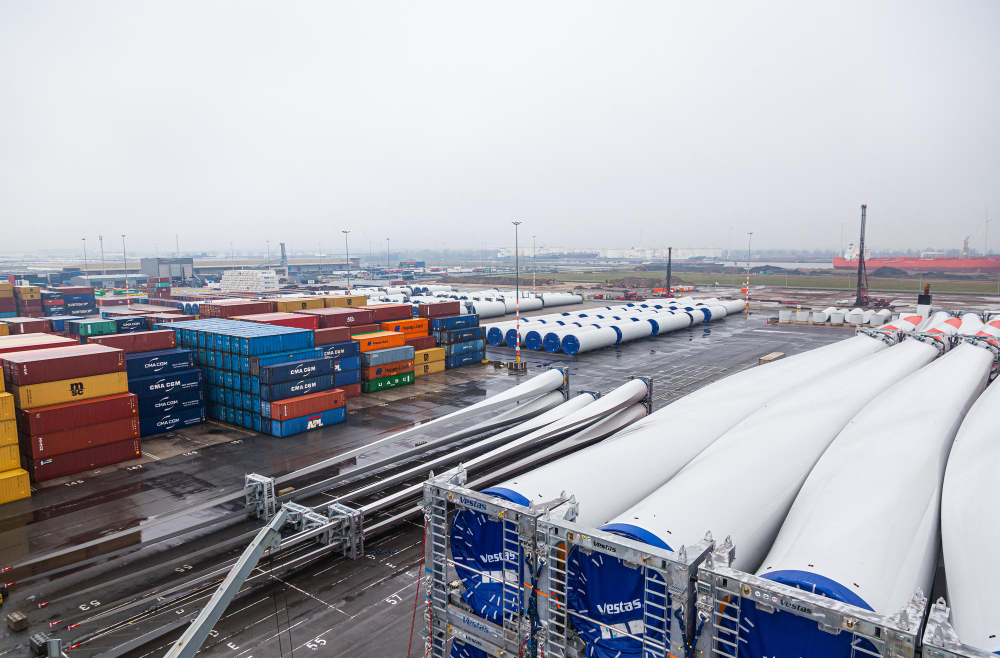
Stand next to a modern wind turbine blade and the scale is impossible to ignore.
Some now stretch more than 100 meters long, longer than a football field is wide.
They are engineered to capture wind for decades, yet during transport they behave like fragile structures that must be supported with extraordinary care.
And before these blades ever generate electricity, they must travel thousands of kilometers across oceans.
Wind turbines are growing larger every year as countries accelerate renewable energy investment. Global wind capacity surpassed 1.2 terawatts in 2025, with hundreds of new wind farms under construction worldwide.
But the growth of wind energy depends on something rarely discussed.
Moving turbine blades across oceans requires specialized vessels, engineered stowage systems, and carefully planned shipping routes. When blades exceed 100 meters in length, ocean freight becomes one of the most complex stages of the entire renewable energy supply chain.
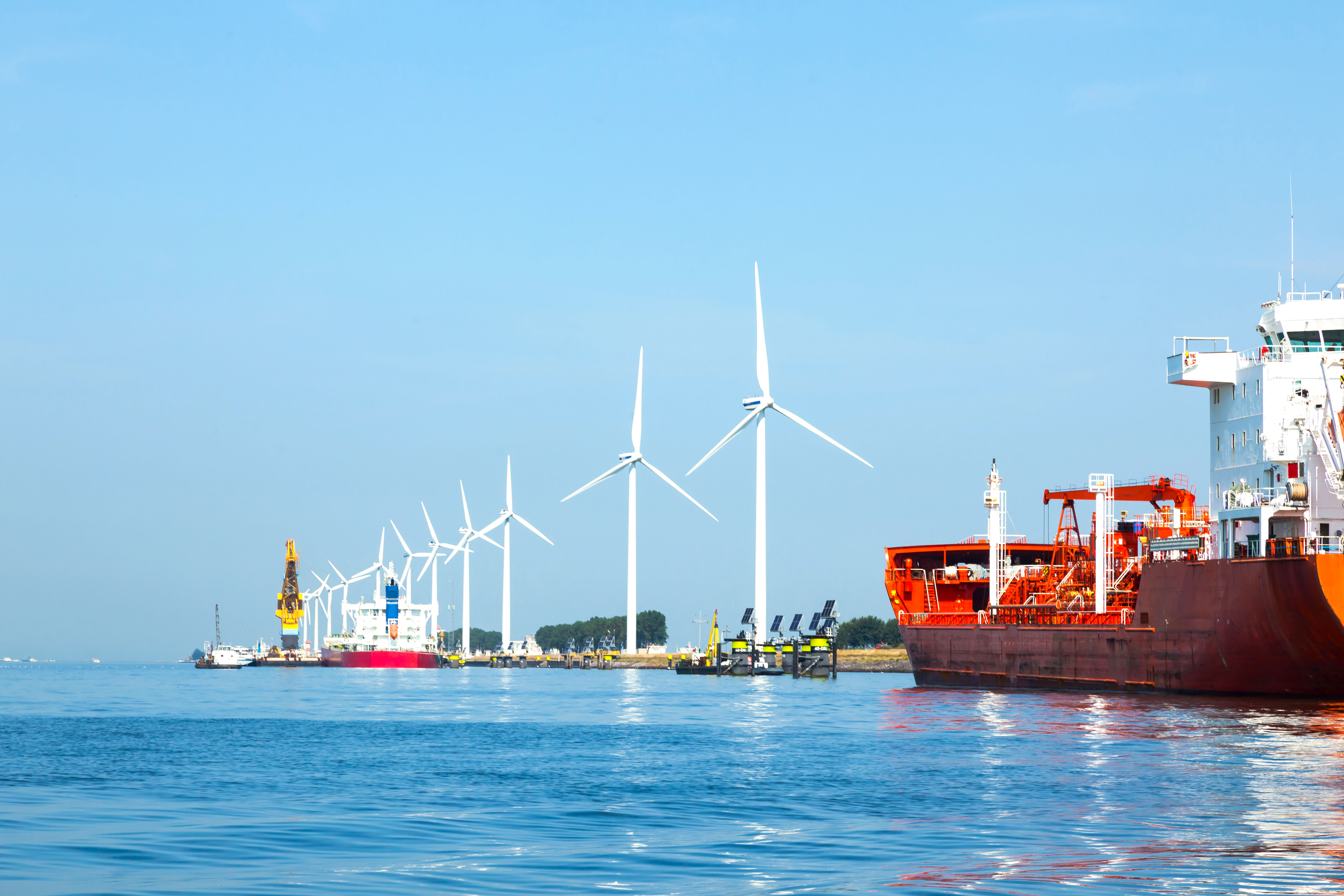
Why Wind Turbine Blades Are Different
Wind turbine blades are constructed from advanced composite materials that combine strength with flexibility. This design allows them to perform efficiently under powerful wind loads for decades.
However, that same flexibility can become a vulnerability during transport.
Unlike containerized cargo, turbine blades cannot be loaded or secured using standard shipping techniques. Their curved structure and tapered geometry require specially designed support systems that distribute weight across precise points along the blade.
Modern offshore turbines illustrate just how extreme these dimensions have become. Today’s blades commonly exceed 100 meters in length, with some designs reaching beyond 110 meters. LM Wind Power, for example, produced 107-meter blades for GE’s Haliade-X offshore turbine, one of the largest wind turbines currently deployed.
At this scale, even small misalignments during loading can introduce structural stress. The challenge is that damage is not always visible immediately. A blade may appear intact upon arrival but reveal internal stress only during installation.
For renewable energy developers operating within tight construction schedules, such failures can disrupt project timelines and significantly increase costs.
That is why transportation planning begins long before a vessel arrives at port.
Vessel Selection Is a Technical Decision
The first step in wind blade transport is vessel selection.
Not every breakbulk or multipurpose vessel can safely accommodate turbine blades. Deck strength, cargo hold dimensions, available lashing points, and vessel stability all influence whether the cargo can be transported securely.
Blades that extend beyond available deck space may experience uneven loading forces. In addition, vessels with higher roll motion in rough seas can subject long cargo structures to repeated stress cycles.
Today, logistics teams rely on detailed vessel data and route analysis to determine which ships are best suited for transporting renewable energy components.
Some modern carriers have also adapted their vessels for renewable cargo, incorporating reinforced decks and extended cargo areas specifically designed for oversized equipment.
Choosing the correct vessel is therefore not simply about availability. It is about ensuring compatibility between ship design, cargo geometry and route conditions.
Stowage Planning That Reflects Engineering Discipline
Once the vessel is selected, attention shifts to stowage planning.
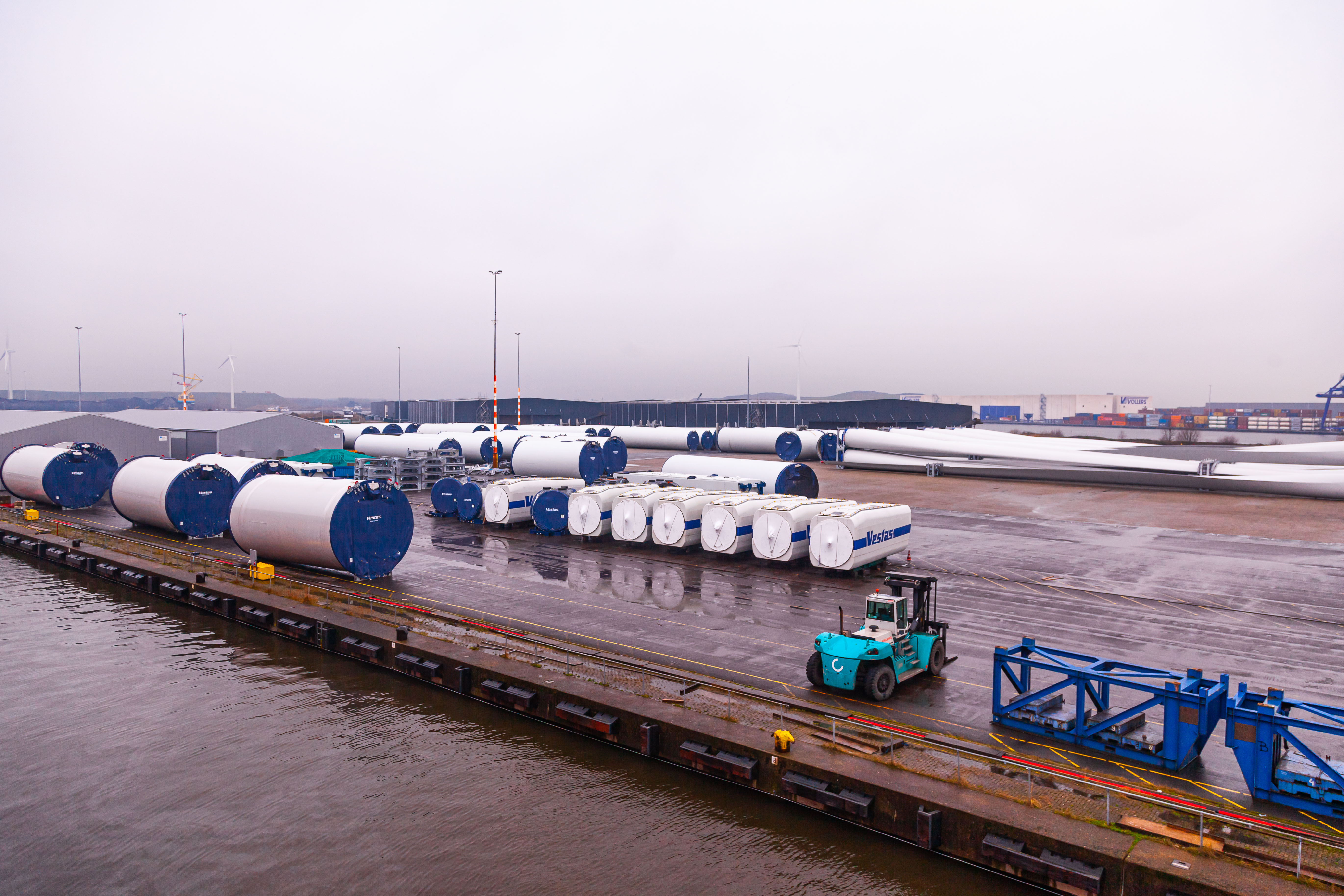
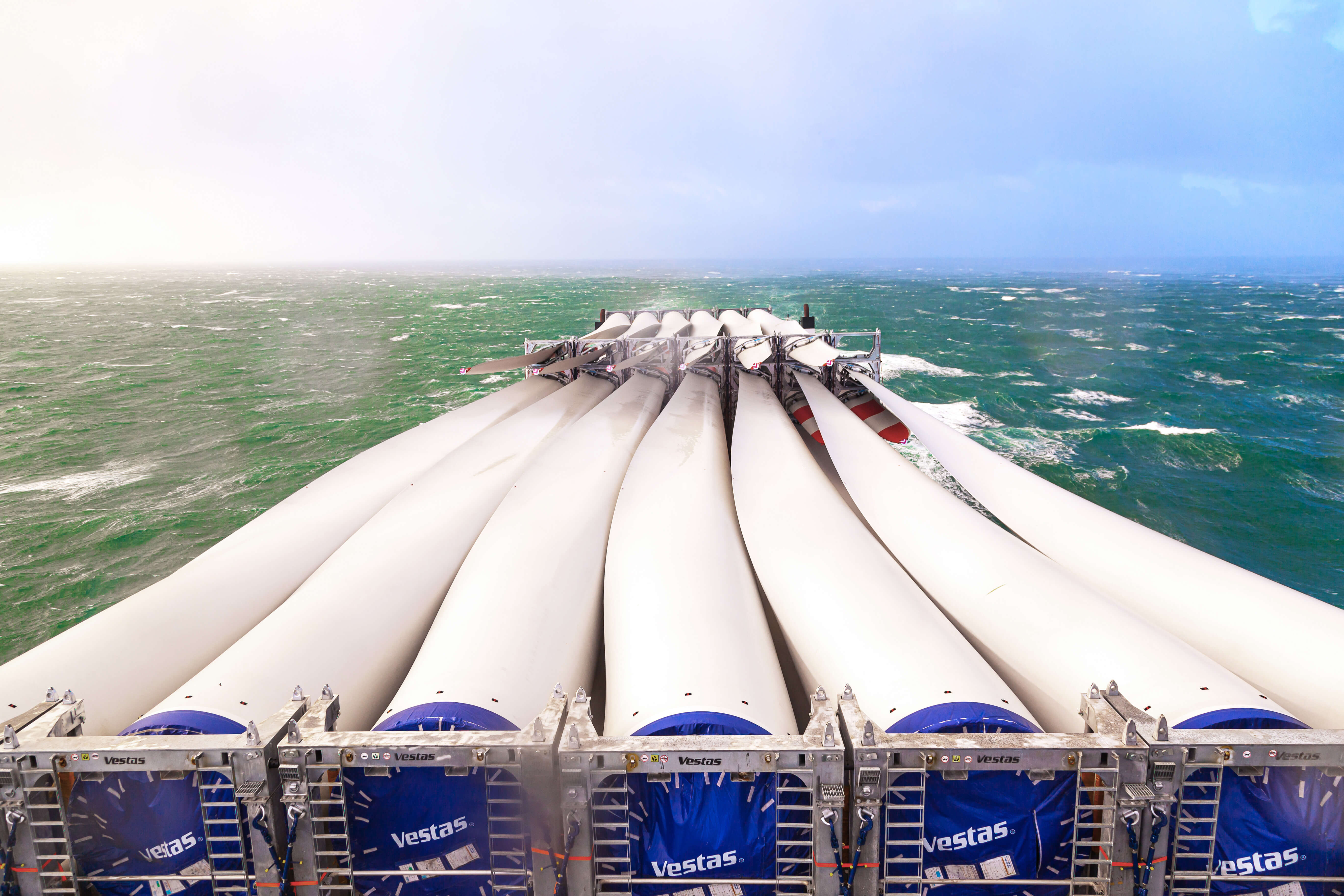
Wind turbine blades are typically secured using custom engineered cradles designed to support the blade at specific structural points. These cradles distribute weight evenly along the blade’s length to prevent bending during the voyage.
Load calculations account for dynamic forces created by rolling, pitching and vibration at sea. While ocean movement cannot be eliminated, it can be controlled through careful planning.
Securing systems have also evolved significantly. Instead of relying solely on chains, project logistics teams often use specialized restraints and custom fittings designed to reduce pressure on critical areas of the blade.
In well executed renewable energy logistics, the loading plan resembles an engineering document rather than a simple cargo checklist.
Climate Routing as a Protective Strategy
Weather has always influenced maritime transport. For wind turbine blade shipments, it plays an even more critical role.
Climate routing involves analyzing forecasted sea conditions and selecting shipping routes that minimize exposure to severe weather.
Sometimes the safest route is not the shortest one.
Large ocean swells can generate repeated stress on long cargo structures. Over the course of a multi week voyage, this stress can accumulate. By adjusting departure schedules or routing vessels through calmer waters, logistics planners reduce the likelihood of structural damage.
This reflects a broader shift in ocean freight strategy. While speed remains important, cargo protection and schedule reliability are equally critical for renewable energy infrastructure projects.
Integration Across the Renewable Energy Supply Chain
Ocean freight is only one part of the logistics chain.
Before blades reach the port, they often travel hundreds of kilometers from manufacturing facilities via road or rail. These inland journeys require route surveys, permits and coordination with local authorities due to the oversized nature of the cargo.
At ports, specialized lifting equipment is needed to handle blades safely. Crane capacity, staging areas and cargo sequencing must all be carefully managed before loading begins.
Every step must align with vessel schedules and project installation timelines.
Misalignment anywhere in the supply chain can delay turbine installation crews waiting at wind farm sites.
This level of coordination is what defines successful project logistics in the renewable energy sector.
Technology Strengthening Ocean Freight Operations
Digital technology is increasingly improving transparency and risk management in renewable energy logistics.
Simulation software allows planners to model blade placement within vessel holds before loading begins. Motion analysis tools can predict how cargo may respond to expected sea conditions during transit.
Some shipments also incorporate monitoring sensors that record vibration, tilt and movement throughout the voyage. This information provides valuable data for shippers, logistics providers and insurers.
Real time vessel tracking further improves coordination with project teams preparing for turbine installation.
Greater visibility across the supply chain ultimately increases confidence in project execution.
Why Reliable Ocean Freight Matters for Renewable Energy
Wind energy projects operate within strict financial and construction frameworks. Delays in component delivery can affect installation schedules, grid connection milestones and investment timelines.
The global wind turbine industry is estimated to exceed USD 170 billion in market value, reflecting the scale of investment flowing into renewable energy infrastructure.
Reliable ocean freight plays a critical role in protecting these investments.
By combining careful vessel selection, disciplined stowage planning and intelligent climate routing, logistics providers help reduce transportation risks associated with oversized renewable energy cargo.
Delivering Precision Across Oceans
Transporting wind turbine blades highlights the close relationship between logistics and engineering.
These components are designed to harness wind energy efficiently for decades. Moving them across oceans requires transportation solutions built with the same level of precision.
Ocean freight practices have evolved alongside turbine technology. Vessel selection has become more analytical. Stowage planning reflects structural engineering principles. Climate routing reduces exposure to severe weather. Digital monitoring improves transparency.
As global wind energy capacity continues to expand, the logistics systems supporting it must remain equally advanced.
Moving fragile giants across oceans requires more than scale.
It requires expertise, planning and disciplined execution to support the world’s transition toward cleaner and more sustainable energy.
FAQs
Why is ocean freight used for wind turbine blades?
Wind turbine blades often exceed 100 meters in length, making them too large for container shipping or air transport. Ocean freight using specialized breakbulk vessels allows these oversized components to move safely between global manufacturing hubs and wind farm construction sites.
How large are modern wind turbine blades?
Modern offshore wind turbine blades commonly exceed 100–110 meters in length, with some next generation designs becoming even larger as turbine capacity increases.
What risks exist when transporting turbine blades?
Improper support, severe sea conditions or incorrect vessel selection can introduce structural stress during transit. Careful stowage planning and climate routing are essential to prevent damage.
Why is logistics critical for wind energy projects?
Wind farms rely on large components such as blades, towers and nacelles that must travel long distances. Efficient logistics ensures these components arrive safely and on schedule so construction and grid connection timelines are maintained.