
By Jitendra Srivastava,
Here’s the thing. In 2026, logistics is no longer a support function. In energy and defense, it is the difference between intent and execution.
A solar park does not go live because modules are available. A wind turbine does not rise because blades are manufactured. A defense installation does not become operational because equipment exists on paper. All of it depends on one hard reality: whether oversized, sensitive, high value cargo can move safely, securely, and exactly on time.
That is the quiet but decisive role of project freight forwarders.
In renewable energy and defense, cargo is rarely standard. Wind blades stretch beyond 60 metres. Nacelles and transformers cross 80 tonnes. Battery systems, inverter skids, radar units, avionics, and aerospace assemblies demand controlled handling and strict compliance. One missed permit, one underestimated bridge load, one delayed clearance can freeze an entire project site.
For companies like Triton Logistics & Maritime, project logistics is not a service line. It is a strategic capability that connects engineering intent with real-world delivery.

Why Project Logistics Must Start at the Planning Table
India’s target of 500 GW of non-fossil capacity by 2030 and its parallel push on defense modernization have one common pressure point: execution certainty.
In renewables, scale has amplified complexity. Larger turbines, heavier components, tighter commissioning windows, and geographically dispersed sites leave no room for improvisation. In defense, the stakes are higher. Compliance, confidentiality, and operational readiness are non-negotiable. Delays are not just costly. They are strategic risks.
Project logistics cannot be bolted on after procurement. It must sit alongside engineering and sourcing from day one.
What Experienced Project Freight Forwarders Actually Do
This work goes far beyond booking vessels or trucks.
It begins with route engineering and physical surveys across ports, roads, railheads, and waterways. It includes managing multi-agency permits, customs, defense-specific clearances, and state-wise regulatory coordination. It requires designing multimodal solutions that balance risk, cost, and time. And it ends on site, with cranes, rigging, sequencing, and last-mile control executed to plan.
Just as critical is what sits behind the scenes: contingency routes, staging yards, insurance structuring, escalation protocols, and real-time visibility. This is how complexity becomes predictable.

Renewable Energy: Speed, Scale, Sensitivity
As projects scale, logistics sensitivity increases. Damaged modules, delayed blades, or mistimed deliveries translate directly into idle cranes, labour downtime, and lost generation windows.
Early logistics engagement allows developers to align component design, packaging, and supplier choices with India’s infrastructure realities. Coastal shipping, rail, and inland waterways reduce road dependence and risk exposure. Sequenced deliveries keep sites moving without congestion.
This is where logistics quietly protects margins and timelines.
Defense & Aerospace: Precision Under Pressure
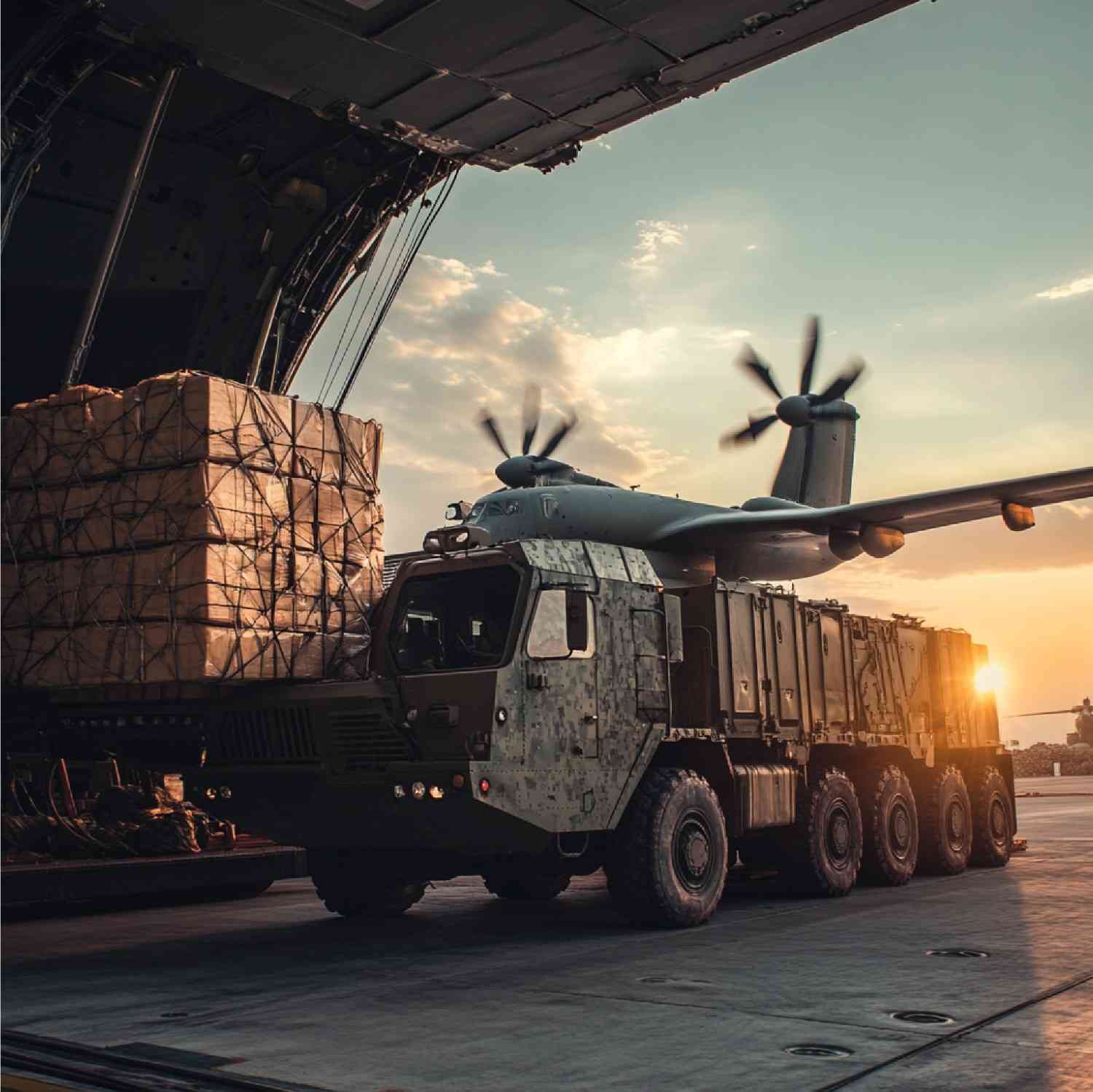
Defense logistics amplifies every requirement. Secure chain-of-custody, export controls, controlled handling, and confidentiality are baseline expectations.
Projects often involve remote bases, islands, high-altitude corridors, or infrastructure-limited zones. Timelines remain firm. Forwarders with defense experience act as trusted execution partners, managing compliance and movement without drawing attention, because reliability here is measured in readiness.
The Triton Approach
Triton operates at the intersection of complexity, accountability, and national priority. Our experience spans over-dimensional cargo, heavy haulage, multimodal routing, and regulatory management across renewable energy and defense programs.
In defense logistics, we have handled avionics and aerospace components under controlled conditions, ensuring secure clearances and disciplined execution. We do not operate as a transactional vendor. We operate as a logistics partner invested in outcomes.
What this really means is simple. Fewer surprises. Fewer delays. Better control.
What Decision-Makers Should Prioritize Now
If India is serious about accelerating energy transition and strengthening defense readiness, three things matter.
First, embed logistics milestones into project approvals. Route feasibility and permits should be validated before ground is broken.
Second, invest in multimodal capacity. Ports, rail sidings, inland waterways, and heavy-lift infrastructure build resilience.
Third, streamline clearances for national priority cargo. Speed with compliance is not a contradiction.
When logistics is visible, measurable, and planned, projects move faster and cost less.
The Bottom Line
India’s progress will be judged not by announcements, but by what gets delivered on ground.
Project logistics is how vision becomes operational reality. As energy capacity expands and defense capabilities deepen, Triton Logistics & Maritime remains focused on one role: connecting intent with execution, and ensuring that critical cargo reaches exactly where it is needed, when it is needed.
That is how progress is powered.