

Who can forget the rush to get shipping paper, the inability to tell where your package is, or wasting hours going to a ports and services office just to get a customs update? Those days are soon becoming distant in 2026. Throughout logistics, the use of digital tools derived through the artificial intelligence, automation, and cloud platforms is not only transforming how fast processes occur within the supply chain but changing how the whole supply chain functions. Paperwork? It is becoming rogue to the fax machine.

The Gradual Demise of Paper in the Logistics
A few years back, one delivery could be made with a pile of papers: bills of lading, invoices, permits, custom forms. Every handoff would have been subject to misplacement or inaccuracy. The result? Time wastage, expenses and fury, all one has to do is ask someone who has lost his temper waiting to find a lost document in a crowded port.
Digital transformation is being adopted by the major players in the logistics industry in the year 2026. Digital tools are considered critical to major operations teams running their businesses because they help them effectively manage costs, gain more visibility, and remove bottlenecks of paperwork, according to industry data.
Smart Logistics through Automation and AI
But what exactly is going on the backstage? AI is no longer a buzzword it is making everything a smooth sail. AI tools combine the available data in real-time and auto-decision making on tasks like deciding the most optimal delivery route, inventory shortage prediction, etc. This implies fewer forms that can cause error, quicker bookings and smart routing.
Tedious procedures such as invoicing, filling of custom forms as well as order processing are being replaced with Robotic Process Automation (RPA). Rather than filling out forms manually, bots automatically fill in fields, verify compliance and even warn about anomalies prior to them creating interruptions.
IOT and Real Time Tracking: Whereabouts of Everything
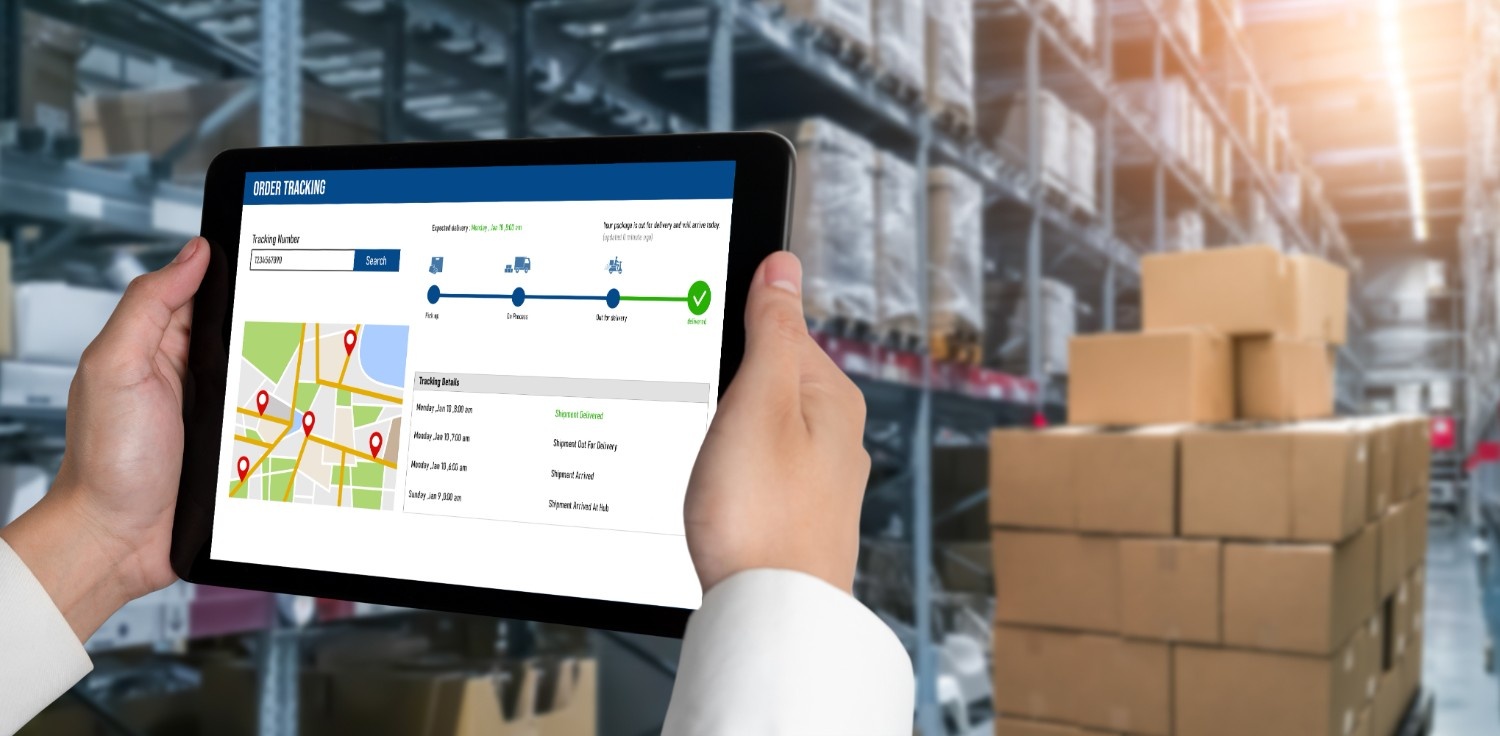
Seeing that nowadays small IoT sensors are the norms in vehicles, containers, and distribution centers, logistics managers are aware of the location, temperature, and, even, the level of shock of cargo, all at any given time. Customs clearance, e.g., has changed from full blind wait to transparent dashboards. Shipments do not simply lose sight of the shore at the border; they ping updates, maybe even every second.
A research conducted in India reveals that document processing by pilots across five largest ports reduced by up to 60% and clearance time fell between 24 to 36 hours following the switching to a paperless environment. Companies have turned to unified bookings, tracking, and customization in homogeneous web-based applications. There is no longer a need to run around with stamped copies, all things get updated in real time.
Cloud Platforms: Teaming up to a point of madness
The emergence of cloud-based logistics management is a massive game-changer. Shared dashboards provide instant and scalable collaboration to warehouse managers, drivers, customs officers, and customers whether on a single shipment or thousands of shipments. Connections with ERPs and the fleet management software eliminate the first copies and make sure that everyone is playing with the same book.
Cloud computing is also able to store documents, provide secure authentication, and incorporate use of tools of digital signature. Even the government agencies are developing on these platforms by digitizing the customs entries and releasing real-time measures such as time-to-clear and detention rates to enhance accountability.
Artificial Intelligence Driven Efficiency and Customer Experience
Digital logistics is not only about speed, it is also about trust. In the case of Standard Manufacturing Ltd in Uganda, after switching to real-time tracking, their export volume increased 50% and they are looking to increased 3 points. Why? Their ability to plan and pivot to disruption resulted in building confidence and growing better.
This movement is felt by customers as well. The 2026 customer is ready to be in charge, and with real-time delivery updates, digital notifications and immediate documentation, their vehicle is not going to delivery at the window, or even to pick up their paper receipt. Now, AI-based systems can send proactive delay notifications, recommend alternative routes, as well as keep the shoppers (or shippers) updated.
Paperless – The Financial and Environmental Victories
The economics are striking. The market of paperless solutions is estimated at about 15-20 billion worldwide and its CAGR is projected at 10-15% till 2033. Administrative overhead is reduced through automation, and millions in fines, time lost during the process, or the loss of goods are saved through error prevention by AI.
Sustainability requirements are also facilitated by paperless operations. Logistics is a huge consumer of paper; the removal of hard copies is saving forests, and companies are reaching their aims to be seen as zero-waste companies.
The Road Ahead (And the Challenges)
It’s not all smooth sailing. Smaller companies have expenses and have to be assisted with the adoption of digitalization, and cybersecurity is a constant threat. So far as the lagging problems go, the threats are significantly stiffer, including delays, lost customers, and a decreasing market share as competitors provide quicker, greener and smarter service.
Real-Life Selected Article: How Going Digital Changes the Game
Suppose of Maxim Exports in India. Paperwork was prevalent and shipments could easily get late and they could not know the rate. Switching to a single digital platform not only enabled them to lock rates, monitor shipments, and expand into new markets, but without the insanity of manual options.
The government and the private operators are coming together with piloting modular systems that combine customs, carriers and warehouses into one model of data. The result? Less risk, quicker dealings, and all of them remain on the same page, both literally and digitally.
Final Thoughts
Electronic resources are not only ousting paperwork, they are redefining the logistics playbook. Logistics are more efficient, transparent, and resilient than ever due to AI, real-time monitoring, and paperless systems as well as automated workflows in 2026. To a person who still hangs on the stacks of forms and ink stamps, the writing is on the wall: the future is smart, seamless and all regarding data-driven possibilities.