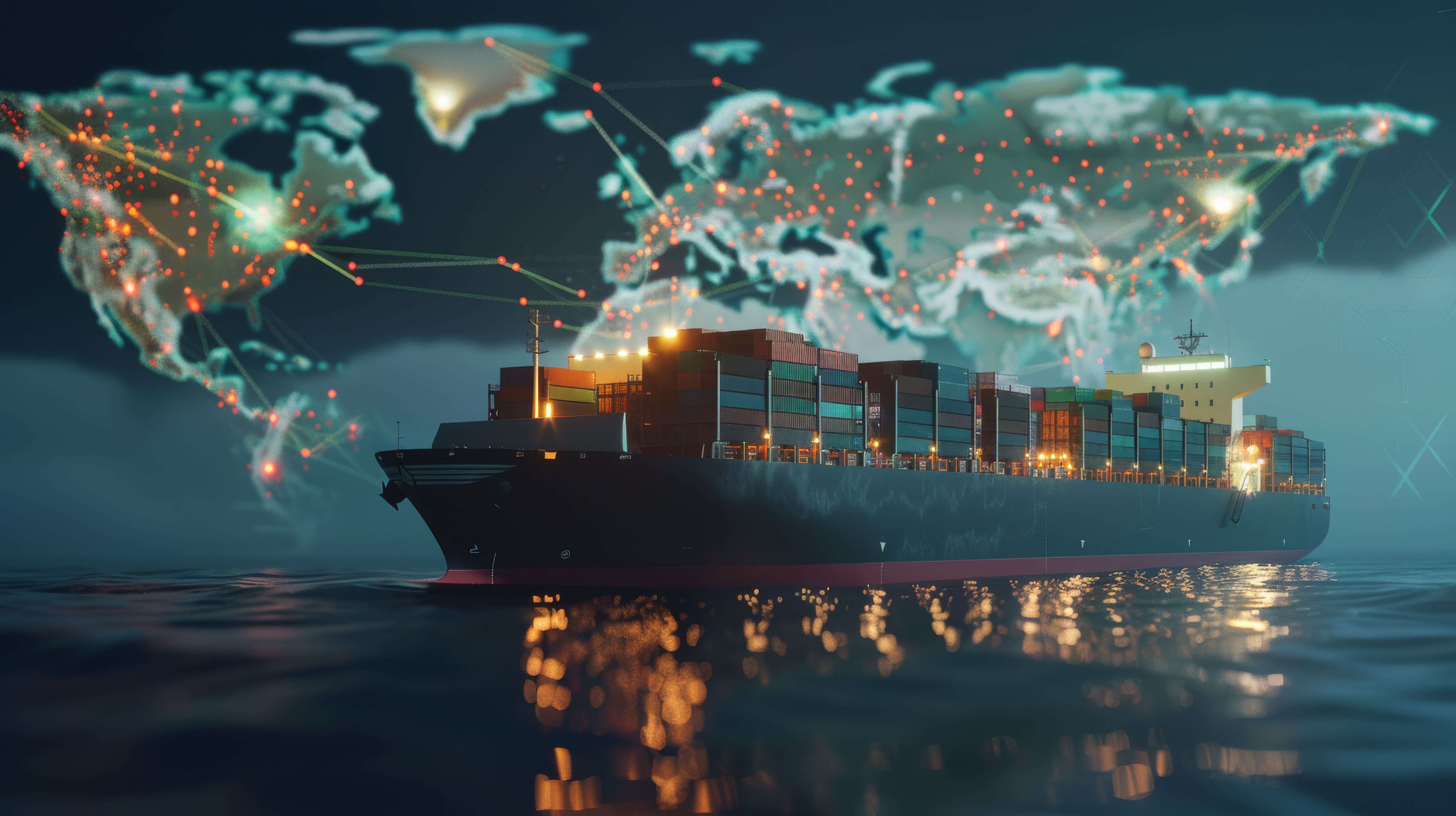
Global trade often feels borderless.
Containers move across oceans, aircraft cross continents overnight, and digital tracking systems show cargo moving seamlessly from port to port.
But beneath that appearance of smooth movement lies a fragile reality.
A significant share of the world’s trade depends on just a few narrow waterways. These passages, known as maritime chokepoints, are strategic corridors where large volumes of global trade pass through extremely limited space.
If even one of them becomes disrupted, the impact spreads rapidly across shipping routes, freight costs, and supply chains worldwide.
Here are five maritime chokepoints that quietly control the rhythm of global commerce.
Strait of Hormuz: The World’s Most Critical Energy Corridor
The Strait of Hormuz, located between Iran and Oman, is widely considered the most important energy chokepoint in the world.
According to the U.S. Energy Information Administration, roughly 20 million barrels of oil per day pass through this corridor, representing about 20% of global petroleum consumption.
In addition to crude oil, large volumes of liquefied natural gas exports from Qatar also transit through the strait.
Most of these shipments head toward Asia. Countries such as China, India, Japan, and South Korea depend heavily on energy transported through Hormuz.
Because of its strategic importance, any geopolitical tension in the region can have immediate consequences for global energy markets and shipping routes.
For a deeper analysis of how current tensions may reshape maritime logistics, read our detailed article:
The Strait of Hormuz Risk: How Middle East Tensions Could Reshape Global Shipping Routes.
Suez Canal: The Shortcut Between Europe and Asia
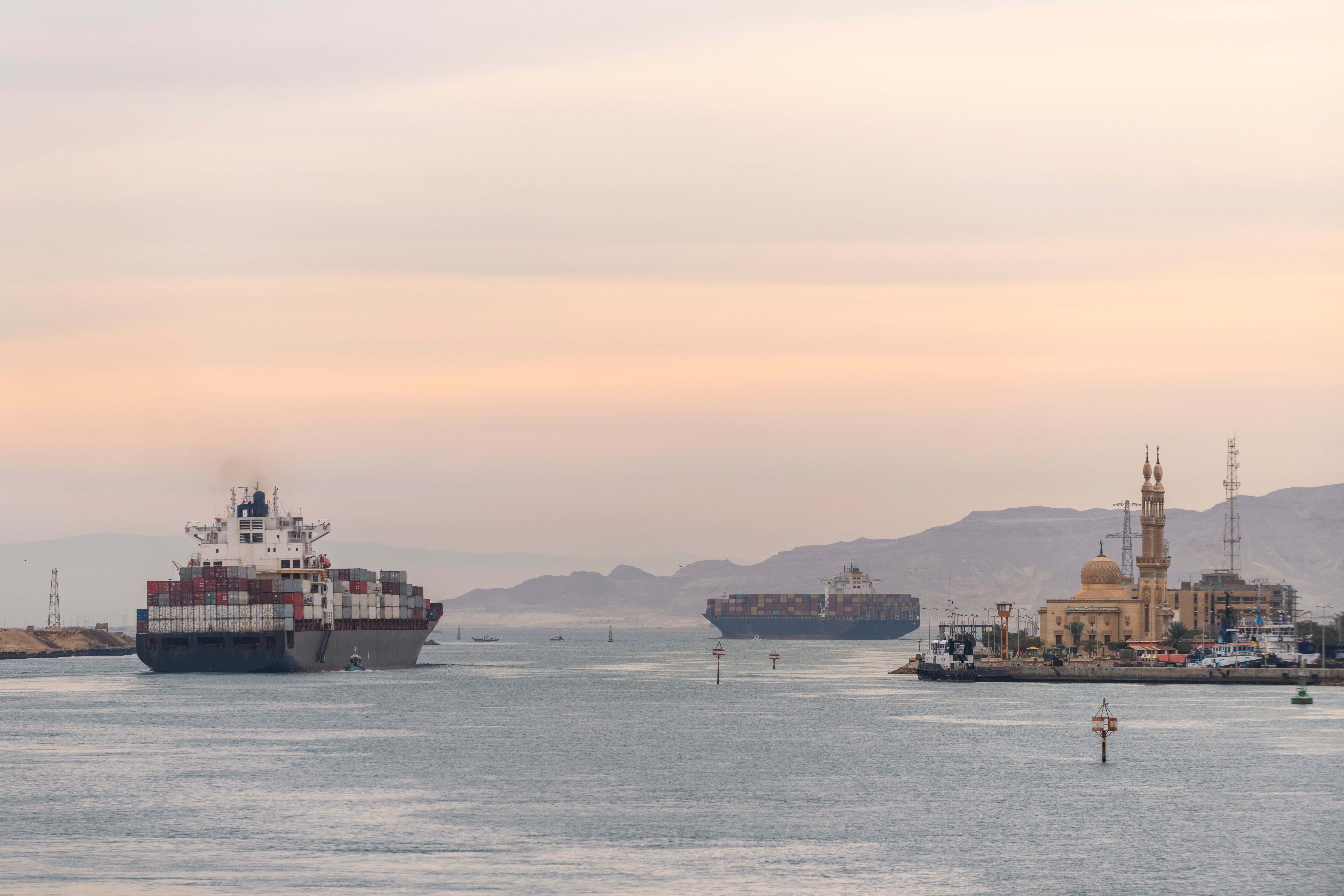
The Suez Canal is one of the most important artificial waterways in the world.
Running through Egypt, the canal connects the Mediterranean Sea with the Red Sea, allowing ships to travel between Europe and Asia without sailing around Africa.
Roughly 12–15% of global trade passes through the Suez Canal, according to maritime industry estimates and canal authority reports.
The canal’s strategic importance became evident during the Ever Given blockage in 2021, when a single stranded vessel halted hundreds of ships and disrupted global supply chains for weeks.
Today the canal remains a vital artery for container shipping, oil transport, and bulk cargo moving between Europe, the Middle East, and Asia.
However, tensions in the Red Sea region have again raised concerns about security risks affecting vessels approaching the canal.
Bab el-Mandeb: The Gateway to the Red Sea
Just south of the Suez Canal lies another strategic corridor: the Bab el-Mandeb Strait.
Located between Yemen and the Horn of Africa, this narrow passage connects the Red Sea with the Gulf of Aden and the Indian Ocean.
The corridor is critical for ships traveling between Europe and Asia through the Suez Canal route.
Energy analysts estimate that more than 6 million barrels of oil per day move through Bab el-Mandeb, along with significant container and bulk cargo traffic.
Because of its proximity to conflict zones and piracy risks, the strait has long been considered a vulnerable point in global maritime logistics.
Disruptions in this region can force ships to reroute around the Cape of Good Hope, significantly increasing transit time and freight costs.
Panama Canal: Connecting the Atlantic and Pacific
The Panama Canal is another cornerstone of global trade infrastructure.
Opened in 1914 and expanded in 2016, the canal connects the Atlantic and Pacific Oceans through Central America.
Around 5–6% of global maritime trade passes through the canal, according to the Panama Canal Authority.
The canal is particularly important for trade between:
- The U.S. East Coast and Asia
- Latin America and Europe
- U.S. Gulf energy exports
In recent years, climate change has introduced new challenges. Severe drought conditions have reduced water levels in the canal system, forcing authorities to limit the number of daily ship transits.
These restrictions have already caused shipping delays and congestion in global trade lanes.
Malacca Strait: Asia’s Trade Superhighway
The Malacca Strait, located between Malaysia, Singapore, and Indonesia, is one of the busiest shipping lanes in the world.
It connects the Indian Ocean with the South China Sea and serves as the primary maritime corridor linking Asia with the Middle East and Europe.
Each year, tens of thousands of vessels transit this route.
According to energy market analysis, roughly 25% of global traded goods and around 15 million barrels of oil per day pass through the strait.
Because the corridor narrows to less than three kilometers in some sections, it remains one of the most strategically sensitive passages in global shipping.
Any disruption here could affect a large share of Asian manufacturing supply chains.
Why These Chokepoints Matter More Than Ever
Global trade may appear decentralized, but maritime geography still shapes how goods move around the world.
These five chokepoints control enormous volumes of energy, commodities, and container traffic.
When one corridor faces disruption, shipping companies must reroute vessels, increasing transit times and freight costs.
Recent events in the Red Sea and the Persian Gulf have shown how quickly geopolitical tensions can ripple across supply chains.
For logistics leaders, exporters, and policymakers, the lesson is clear.
The resilience of global trade depends not just on ports and vessels, but on the stability of a handful of narrow waterways.
Understanding these chokepoints is essential for navigating the future of global logistics.
FAQ
What are shipping chokepoints?
Shipping chokepoints are narrow maritime passages where large volumes of global trade must pass through limited routes. Disruptions in these corridors can significantly affect shipping schedules, freight rates, and supply chains.
Which is the most important shipping chokepoint in the world?
The Strait of Hormuz is widely considered the most important chokepoint because roughly 20% of global oil consumption passes through it every day, according to the U.S. Energy Information Administration.
How much global trade passes through the Suez Canal?
Industry estimates suggest roughly 12–15% of global trade flows through the Suez Canal, making it one of the most critical routes connecting Europe and Asia.
Why is the Malacca Strait important?
The Malacca Strait is one of the busiest shipping lanes in the world, connecting the Indian Ocean with the South China Sea and supporting trade between Asia, the Middle East, and Europe.
What happens if a major shipping chokepoint closes?
If a chokepoint closes, ships must reroute through longer alternative routes, increasing fuel costs, transit times, insurance premiums, and overall supply chain volatility.