

By Jitendra Srivastava
The global green energy shift is no longer a forecast. It is measurable.
According to the International Energy Agency (IEA), global renewable energy capacity surpassed 3,700 GW in 2024, with solar and wind accounting for the overwhelming majority of new additions. The IEA’s Renewable Energy Outlook projects that renewable capacity additions through 2028 will equal the total installed capacity of China, the United States, the European Union, and India combined.
India alone, as per the Ministry of New and Renewable Energy (MNRE), Government of India, crossed 190 GW of installed renewable energy capacity in 2025 and remains committed to achieving 500 GW of non-fossil capacity by 2030.
These numbers are widely quoted.
What is not discussed enough is how this infrastructure moves.
Every turbine nacelle, monopile foundation, transition piece, and photovoltaic module must cross oceans before it generates a single kilowatt. Ocean freight is not peripheral to renewable energy growth. It is foundational.
Renewable Energy Is Reshaping Ocean Freight Demand
According to the International Renewable Energy Agency (IRENA), global offshore wind capacity exceeded 75 GW by 2024 and is expected to more than triple by 2030. Offshore wind projects are inherently maritime in nature. Manufacturing may occur in Asia or Europe, while installation takes place hundreds or thousands of nautical miles away.
At the same time, the World Trade Organization (WTO) reports that global trade in environmental goods, including solar panels and wind components, continues to expand steadily, reinforcing cross-border movement of renewable energy equipment.
Ocean freight remains the dominant transport mode in global trade. The United Nations Conference on Trade and Development (UNCTAD) confirms that over 80 percent of global merchandise trade by volume moves by sea. Renewable energy infrastructure is embedded in that statistic.
Unlike standardized containerized goods, renewable energy cargo often includes:
- Turbine blades exceeding 80 meters
- Tower sections weighing hundreds of tons
- Offshore foundations weighing thousands of tons
- Sensitive photovoltaic modules requiring protective handling
This scale is transforming demand patterns within ocean freight markets.

Specialized Vessels: A Structural Requirement
Not every vessel can carry the energy transition.
Offshore wind foundations and heavy nacelles require heavy-lift or project cargo vessels equipped with reinforced decks and high-capacity cranes. Monopiles for offshore wind farms can weigh more than 1,500 tons per unit.
According to data referenced in the European Commission’s Offshore Renewable Energy Strategy, Europe alone targets 300 GW of offshore wind by 2050. Achieving this requires sustained vessel availability and marine logistics capacity.
In Asia, including India, offshore wind is gaining policy traction. The MNRE Offshore Wind Policy framework identifies Gujarat and Tamil Nadu as priority zones for development. As projects materialize, ocean freight will serve as the primary artery connecting fabrication yards to offshore installation sites.
Roll-on roll-off vessels and specialized deck carriers are increasingly used for pre-assembled renewable energy structures, minimizing vertical lifting and reducing stress risk during loading.
Vessel selection is no longer a freight rate decision. It is an engineering decision.
Ports Are Becoming Renewable Energy Hubs
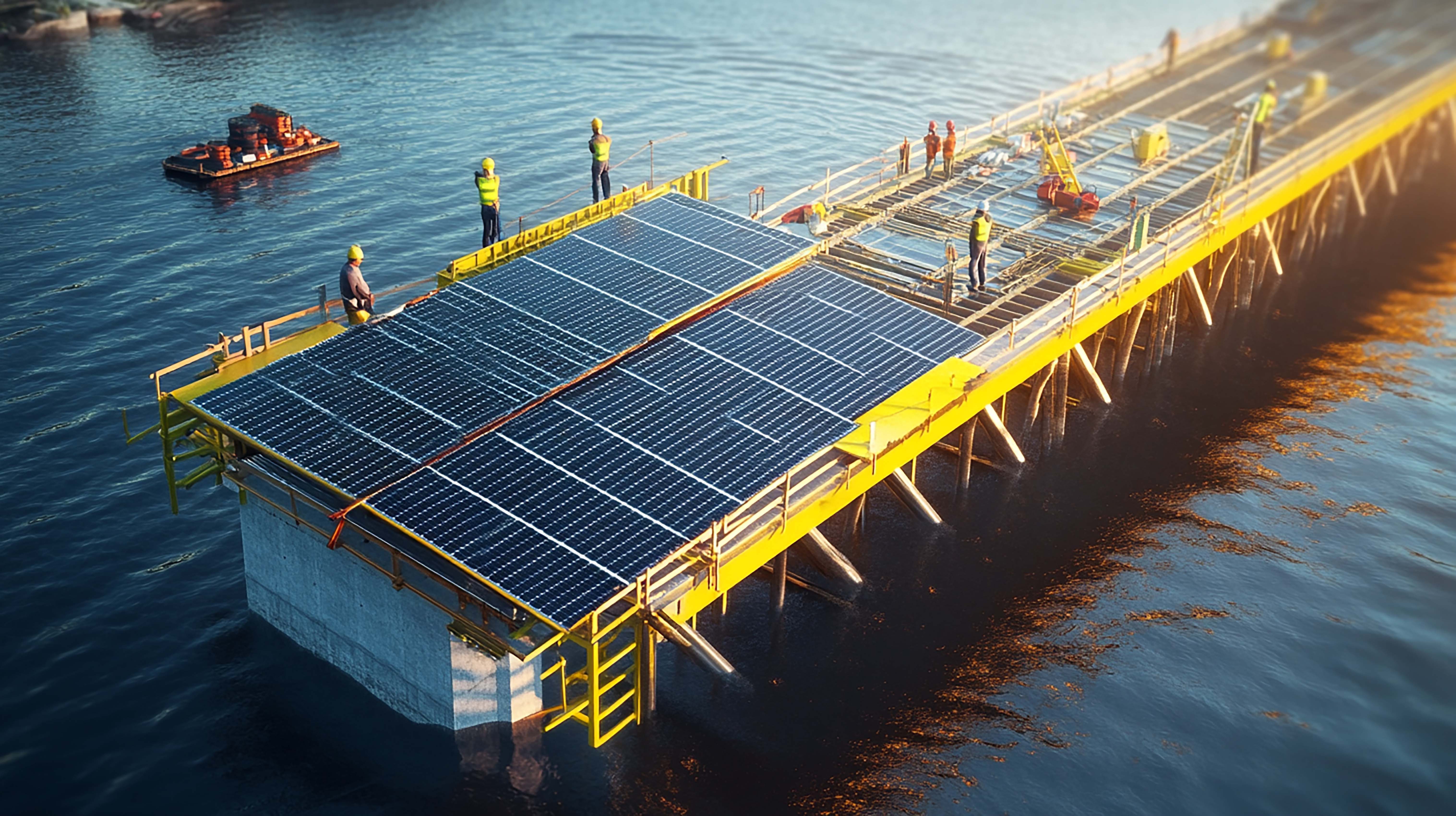
Ports are no longer transit points. They are assembly and staging ecosystems.
The International Association of Ports and Harbors (IAPH) reports that major ports worldwide are upgrading quay strength, crane capacity, and laydown areas to handle renewable energy components.
In India, the Ministry of Ports, Shipping and Waterways has emphasized port-led industrialization under the Sagarmala Programme, improving cargo handling capacity and multimodal integration. Major ports such as Mundra, Kandla, and Chennai increasingly handle project cargo linked to renewable energy infrastructure.
For offshore projects, ports function as:
- Storage and pre-assembly zones
- Blade and tower marshalling yards
- Heavy lift loading platforms
- Customs clearance centers
A delay in port coordination can disrupt offshore installation windows that depend on weather and marine conditions.
Ocean freight planning for renewable energy now begins months before a vessel berths.
The Freight Forwarder as Strategic Integrator
In complex renewable energy logistics, the freight forwarder becomes the central coordinator across stakeholders.
The role extends beyond booking space.
It includes:
- Evaluating vessel compatibility for oversized cargo
- Assessing port handling limits
- Engineering lashing and stowage plans
- Aligning ocean freight with inland heavy haulage
- Managing customs, compliance, and marine insurance
The World Bank’s Logistics Performance Index (LPI) consistently highlights infrastructure quality and logistics competence as decisive factors in trade efficiency. Renewable energy cargo, with its high value and complexity, amplifies this reality.
Early involvement of an experienced freight forwarder reduces schedule slippage and cost escalation risks in large-scale renewable energy deployments.
In projects valued in hundreds of millions of dollars, logistics precision becomes financial discipline.
Risk Management in Ocean Freight for Green Energy
Marine insurers identify three recurring risk areas in renewable energy shipments:
- Improper lashing and securing
- Inadequate route planning
- Congestion-driven handling delays
Given the capital intensity of renewable energy infrastructure, transit damage can result in months of project delay.
Risk mitigation in ocean freight for renewable energy typically includes:
- Detailed stowage engineering
- Weather-routing strategies
- Pre-shipment inspections at manufacturing yards
- Continuous marine monitoring
- Integrated coordination between port, vessel, and inland transport
Each layer protects not just equipment, but installation schedules and investor confidence.
Aligning Ocean Freight With Sustainability Mandates
Renewable energy developers increasingly evaluate logistics emissions.
The International Maritime Organization (IMO) adopted a revised greenhouse gas strategy targeting net-zero emissions from international shipping by or around 2050. This regulatory direction influences vessel selection, fuel strategies, and operational practices.
Many renewable energy projects now incorporate carrier sustainability metrics into procurement decisions. Selecting lower-emission vessels and optimized routing aligns maritime operations with broader green energy commitments.
Ocean freight, traditionally seen as a carbon-intensive sector, is under pressure to evolve in parallel with renewable energy growth.

The Quiet Infrastructure Behind the Energy Transition
Renewable energy headlines focus on turbines rising offshore and solar parks stretching across deserts.
The less visible reality is that these symbols of green energy begin as ocean freight consignments.
According to UNCTAD, maritime trade volumes exceeded 12 billion tons annually in recent reporting years. Renewable energy infrastructure forms a growing share of high-value project cargo within that flow.
Ocean freight provides the structural bridge between manufacturing hubs and installation zones. Specialized vessels, capable ports, and experienced freight forwarders collectively enable scale.
As renewable energy capacity targets accelerate toward 2030 and beyond, the maritime dimension will only intensify.
Conclusion
Government and multilateral data confirm one thing clearly: renewable energy expansion is accelerating at historic speed.
But expansion at scale requires movement at scale.
Ocean freight powers that movement.
From heavy-lift vessels carrying monopiles to container ships transporting photovoltaic modules, maritime logistics underpins the global green energy boom.
For developers and manufacturers, selecting the right freight forwarder is no longer operational detail. It is strategic risk management.
At Triton Maritime & Logistics, we support renewable energy stakeholders through structured ocean freight planning, port coordination, and disciplined project cargo execution.
The energy transition floats before it flows.
And ocean freight is what carries it forward.
FAQs
Why is ocean freight critical for large-scale renewable energy projects?
Most wind turbine components, offshore foundations, and solar modules are manufactured far from installation sites. According to UN trade data, over 80 percent of global merchandise trade by volume moves by sea. For oversized and heavy renewable energy cargo, ocean freight is the only viable mode that can handle scale, weight, and distance economically.
What types of vessels are used to transport wind and solar infrastructure?
Renewable energy cargo typically requires heavy-lift vessels, project cargo ships, roll-on roll-off vessels, and in some cases specialized offshore installation vessels. Standard container ships are used mainly for photovoltaic modules, while turbine towers, monopiles, and nacelles require reinforced deck carriers with high-capacity cranes.
How do ports support offshore wind development in 2026?
Ports now function as staging and assembly hubs. They provide reinforced quays, large laydown areas, and heavy crane capacity to handle oversized components. Many ports are investing in renewable-focused infrastructure to align with national offshore wind expansion targets.
What are the biggest risks in ocean freight for renewable energy cargo?
The main risks include improper lashing, weather exposure during transit, port congestion delays, and misalignment between vessel arrival and installation windows. Since offshore installation depends heavily on weather conditions, even minor shipping delays can impact project timelines.
How does vessel availability affect renewable energy project schedules?
With offshore wind capacity expanding globally, demand for heavy-lift and specialized vessels has increased. Limited vessel availability can delay transport slots, which in turn may postpone installation campaigns and increase overall project costs.