
Have you ever thought of why there are more acronyms in logistics than in a government agency? The names 1PL, 2PL, 3PL, 4PL, and 5PL are like alphabet soup, yet, they narrate a very interesting story of how the business transports goods around the globe. We will dissect what each of them entails and why it is important in 2025.

Knowing the Logistics Provider Spectrum
Consider these levels of logistics as a ladder. One more uphill stride means additional outsourcing, additional complexity, and to tell the truth, additional assistance in running your supply chain. It is not one being superior to the other. It is about finding what is appropriate to your business today.
1PL: The DIY Approach
The first party logistics or 1PL is simply you doing it yourself. You possess the trucks, run the warehouses, organize the drivers and do all the headaches of moving your own products. It is complete domination and complete liability.
This is a fantastic concept in the event that you are a small artisan or local producer and do not require massive-scale. However, to be truthful, as your firm expands, having everything in-house will be less of control and more of being spread too thin.
2PL: The arrival of the Transporters
Asset based carriers are the Second Party Logistics companies. Here we are referring to shipping lines, airlines, trucking companies and freight forwarders who own the actual vehicles and equipment. They are involved in the physical movement of your goods between point A and B.
Consider that you are a farmer selling produce. You can do it all yourself (that is your 1PL side), and then get a trucking company to deliver your products to the market. That trucking company? That’s your 2PL partner. They are experts of transportation, that is all.
3PL: The Game Changer
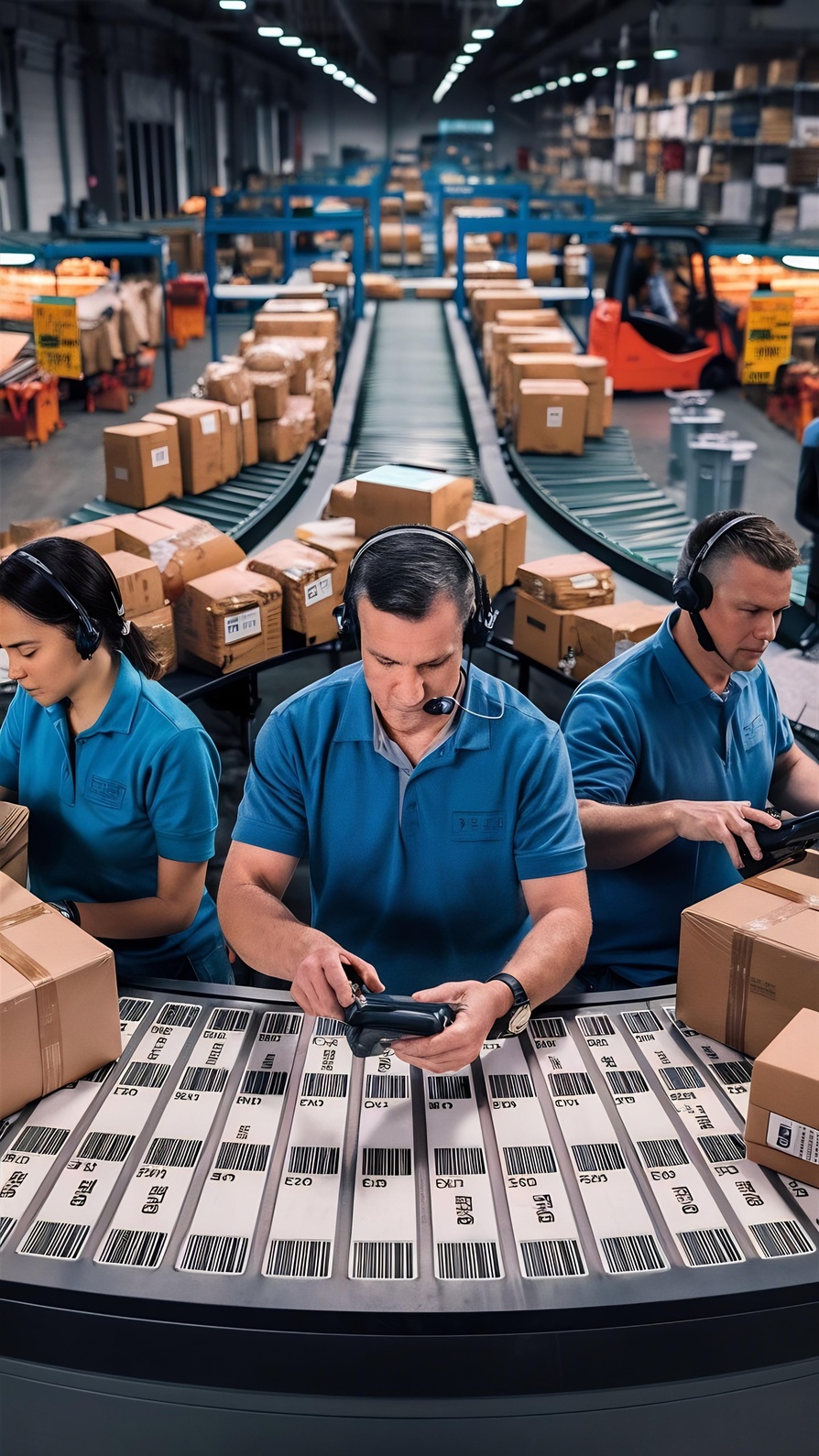
This is where the interesting part comes in. The 2025-way businesses are run has changed with the TPL providers. By 2024, the 3PL market has reached an unprecedented mark of $1.5 trillion, and is estimated to increase at a rate of 10.1 percent each year till 2034. That’s not just growth. That’s explosive demand.
Why? Since 3PLs do not merely transfer your stuff. They hold it, package it, maintain your inventory, returns and conduct all logistics. Approximately 70 per cent of all 3PL services in the market today are somehow related to e-commerce and this is understandable by considering how much we all shop on the net.
The 3PL industry in the U.S. alone is projected to be at $246.25 billion, and this is the best part; more than 90 percent of the fortune 500 companies employ one or more 3PLs. In the running of business, it makes sense to outsource the logistics to people who breathe this stuff. And you specialize in what you are good at and they do the rest.
4PL: The Orchestrator of Strategy
Fourth Party Logistics goes one step further. A 4PL provider does not merely perform the logistics activities. They handle your whole strategy of the chain supply. Consider them the director of an orchestra, the one who integrates several 3PLs, carriers, and service vendors to produce a single harmonious symphony of the supply chain.
By the year 2025, the global 4PL market size is estimated to be at 73.92 billion and by 2034, it is projected to be at 141.74 billion with an annual growth of 7.5%. That is almost doubling within a period of time. Firms are slowly becoming conscious of the fact that someone is required to handle the mess of contemporary supply chains, particularly when handling the complicated international operations.
That is the difference between 4PLs: in most cases, they do not possess a physical asset such as trucks or warehouses. They instead add vast knowledge in supply chain optimization, technology integration and strategy. They apply high-tech analytics, control towers, and real-time monitoring to ensure that everything is running well.
5PL: The Future Is Here
Fifth Party Logistics is the future of supply chain management. By 2025, global 5PL market will have an upsurge to 10.56 billion, and reach 19.27 billion by 2033 and the growth rate is projected to be 7.8 percent in a year. These supply chain providers use artificial intelligence, IoT devices, big data analytics, and blockchain technology to develop fully integrated and automated solutions to the supply chain.
What makes 5PL unique? They do not merely operate your supply chain. They design using raw materials. They combine services of various providers, bargain on better fees due to bulk buying power, and technology to streamline each and every process. It is a Supply Chain as a Service, which is tailored to the digital age.
E-commerce is one of the areas where 5PL providers are especially favoured because they can manage such complexity as the logistics of the omnichannel, i.e. procurement and last-mile delivery of products on a variety of platforms. They are developing the supply chains of the tomorrow, now.

Which one is suitable to your business?
There’s no universal answer. Small businesses could be effective under 1PL or 2PL. E-commerce firms which are expanding usually resort to 3PL due to their nimbleness and experience. Big companies with complicated multinational business may require 4PL strategic management. And enterprises that are massively engaged in various channels? 5PL might be their ride to efficiency.
In 2025, the logistics business is no longer about transportation of boxes. It is about information, technology, plan and alliance. Knowing these five levels will assist you to make better choices regarding the stakeholders that are to manage what aspects of your supply chain. Due to the fact that in the end of the day, the ability to deliver your products to the consumers in a cost-effective, reliable, and efficient manner is what keeps the businesses afloat.