

Innovation is a catchphrase in India as never before. The issue on everyone’s mind in 2025 is: can India innovate rather than import? This has stopped being a daydreaming debate. From domestic electronics to innovations in clean energy and advances in artificial intelligence, Indian R&D is challenging Chinese technological hegemony. We will now take a look at the stories, numbers, and passion propelling the renaissance of R&D in India this year.
Shenzhen to Noida: India Revolution in Semiconductors
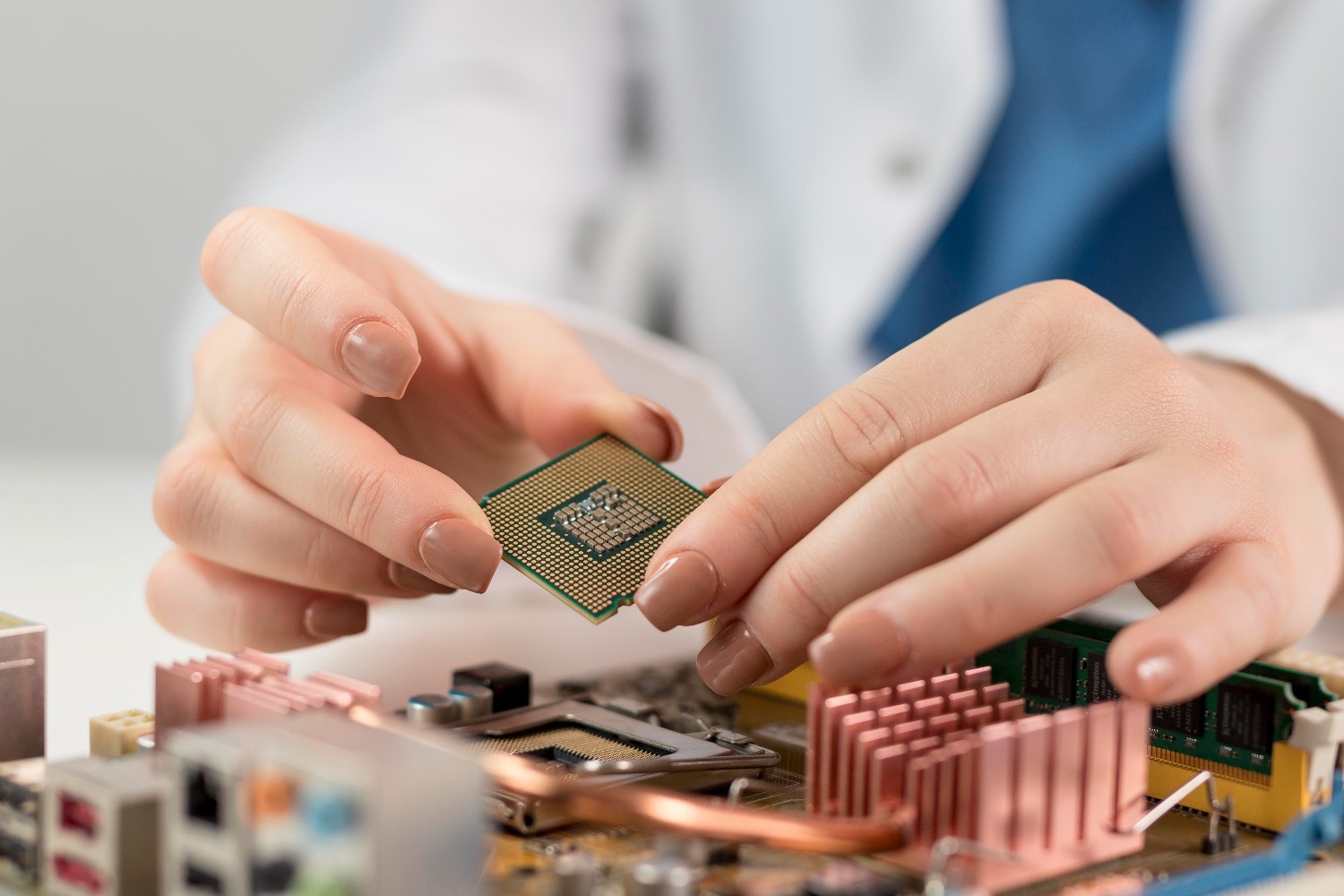
This year, the first locally designed semiconductor chip will go into mass production in India. And not just a lab or prototype model, but an entire market-ready chip of normal size, to start shipping out of the Dholera manufacturing facility as early as the end of 2025. Its significance cannot be exaggerated: when the global supply is suffering from chip shortages, the very fact of a “Made in India” chip translates into not just self-sufficiency but also future-proofing smartphones and EVs (and defense technology to boot). The momentum runs deeper.
RIR Power Electronics inaugurated the first Silicon Carbide (SiC) semiconductor factory in India in Odisha, which is propelling the power electronics and electric vehicle sectors. To complement this, the government also cleared two electronic assembly centers in Madhya Pradesh, more than 85 working companies, and a big export of over 5 lakh crore. It is not fully privatized, and programmes like the Future Skills Program are training over 20,000 engineers in high-value electronics design every year.
Green Energy: It is not a Case of Catch-Up, but Leadership. Nobody, including China, is going to follow India on green energy.
Solar capacity should reach a record 170 GW by March 2025, catapulting India to the forefront of global renewable energy.
The government’s National Green Hydrogen Mission, inaugurated in 2024 with an initial outlay of Rs 600 crore, is gaining steam this year. Bharat Petroleum alone is investing up to 1 billion USD to produce 2 GW of green hydrogen, all using domestic technologies. We are witnessing game-changing battery and storage initiatives that are sprouting from Pune to Bengaluru. The goal is clear: reduce the heavy imports, create regional value chains, and emerge as a champion in the clean energy race in Asia. The August announcement of the 12 billion long-term Innovation Scheme encourages research and development of sunrise sectors, i.e., green hydrogen, new batteries, and next-generation solar panels, with indigenous Indian patents and domestic pilot projects being strongly emphasized.
The AI Awakening: Putting China to the Test
The field of artificial intelligence is often seen as the first choice for Indian R&D. It is a fact that China led in patent filings and computing power, but it is the Indian AI ecosystem that is making the news for inclusivity, ethical use, and global collaboration. Under the nation’s skilling programs, over 1 million Indians have learned advanced AI. Solutions for homegrown and globally applicable governance, law enforcement, and logistics are also being demanded of Indian AI startups such as Tagbin, Staqu, and GreyOrange.

India is also pioneering in complete rural governance and citizen feedback AI, which are closely associated with real-life impact rather than theory or scale.
Such a humanist perspective towards AI is sweeping the globe and attracting record foreign investment, with a 60% spike in AI-related foreign capital in 2025.
Strategic AI relationships between the EU, Japan, and Australia on one side and India on the other are not just talk. They’re about digital ethics, democratic application of artificial intelligence, and the open-source approach -an alternative narrative from state-directed, surveillance-oriented technology in China. No surprise, therefore, that Indian AI experts will have significant demand in Silicon Valley to Tokyo, as they bring lessons learned in China but do things differently.
Those days are history when Indian R&D merely trailed China in its footsteps. The audacity to create, grow and protect indigenous technology is something breathtaking in 2025. There is a burst of public-private collaboration, with tech giants and startups coming together on nanotechnology, chip design, and green energy. Strategic funding is a huge lever. TheOne-lakh-crore Research, Development and Innovation Scheme is building the kind of patient capital that deep tech needs to scale, which Indian startups and research groups have only looked at enviously in the Beijing playbook. Having policy, industry, and academia all in step, what happens is not imitation but the definition of Indian tech and how it gets used in Indian contexts, then exported to the world.
The Road Ahead: The Challenges and Hope
Of course, the road to R&D in India is not smooth. Information technology, top research talent and long-term investment are in the making. China still dominates India in basic research and quantity of patents at a great height.
But to speak the truth, it is just a new confidence that will make the story in 2025. Native innovation is no slogan; it’s becoming a reality in the world of electronics, green energy, and AI.
This is the first time that India’s place in the technological world is based not only on what India can buy or code for others, but what India can create for itself, and perhaps of the world as well.