It’s an exciting era for Indian brands. The old story of cheap Chinese imports dominating Indian shelves is finally getting a rewrite. Since the government rolled out Production Linked Incentive (PLI) schemes, we’ve watched the spectacular rise of local champions, especially in electronics, e-commerce, and renewables, that are eroding the market share of Chinese imports and redrawing the competitive map. Follow the numbers, and case studies show just how rapidly the change is occurring.
India’s Six-Fold Electronics Leap
Indian electronics manufacturing isn’t creeping ahead, it’s running. A decade back, India’s overall production was at just ₹1.9 lakh crore. Fast forward to 2024-25, and it’s zoomed to almost ₹11.3 lakh crore, a six-fold increase supported by government schemes, strong domestic demand, and PLI-supported brand investments.
See the growth for yourself:

Electronics production in India: 2015 vs 2025

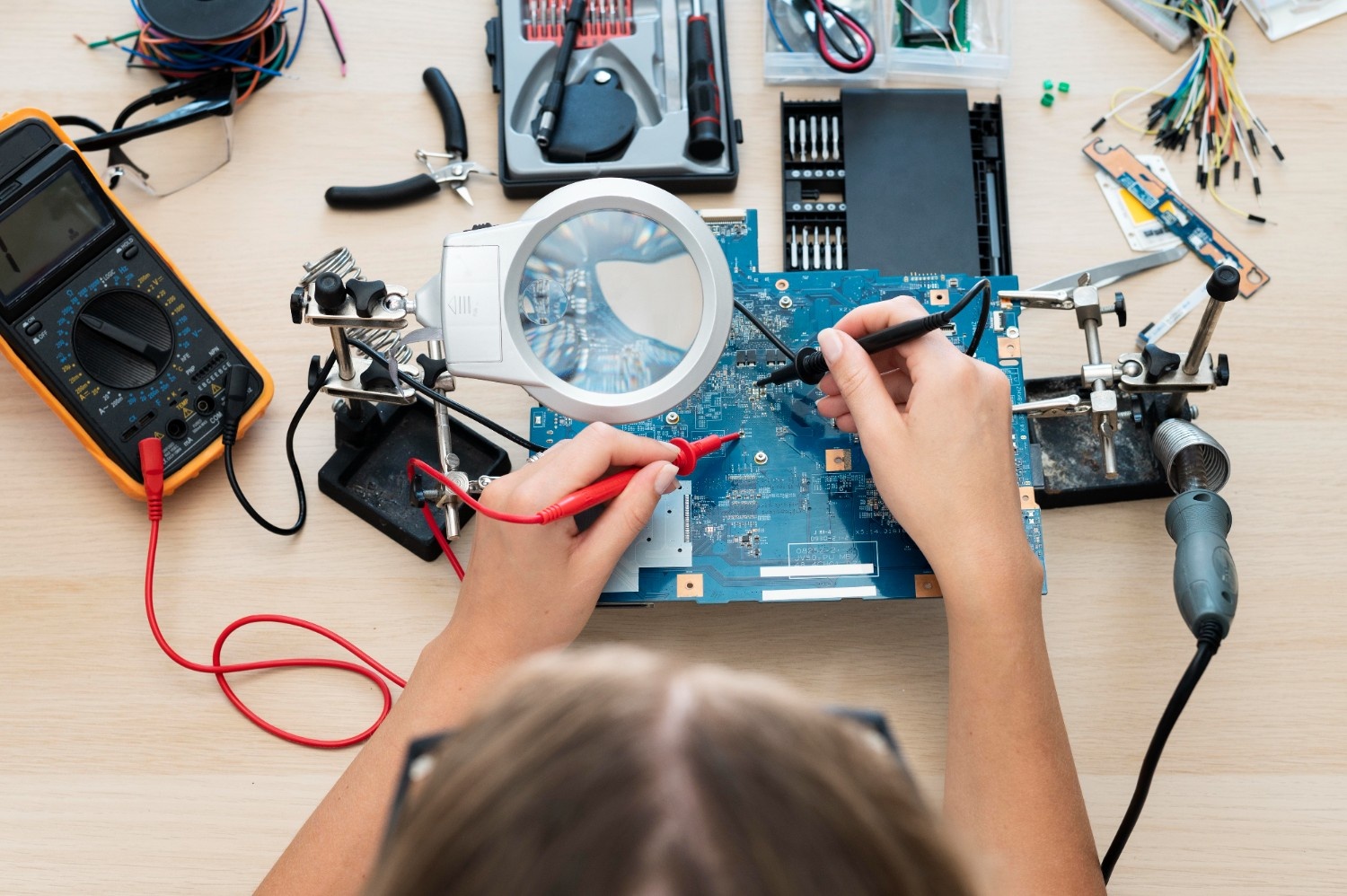
What changed? Rather than having to import, domestic manufacturers, such as Amber Enterprises, Dixon Technologies, and Tata Electronics, began large-scale production of smartphones, smart TVs, and IoT devices. Currently, the Indian electronics industry is valued at 83.9 billion and is expected to reach 162.74 billion by 2034. The market is dominated by Indian-made phones, which now command nearly half of the market, with brands such as Micromax and Lava returning to the game alongside giants such as Samsung (the manufacturing territory of which is firmly located in India).
Case Study: Dixon Technologies
Dixon was a small contract producer, but now produces millions of TVs, washing machines, and smartphones annually, packed with features. It has taken over contracts previously undertaken by the local suppliers in China by collaborating with OnePlus, Xiaomi, and Samsung under the PLI scheme. By the latest statistics, Dixon has increased its revenues by 38 percent and doubled its output capacity following landing of PLI incentives. It is a cliché of policy versus street-smart.
E-Commerce: India Fastest Growth Story
The Indian homegrown startups are competing on a level playing field with the best of China in the e-commerce arena. By 2025, Indian e-commerce is recording $150 billion due to the adoption of UPI, expansion of Tier-2 cities, and emergence of so-called quick commerce – same-day grocery and essentials delivery in dozens of cities.
The overall e-commerce market in China is 1.7 trillion, which is still small compared to India. However, the thing that is changing here is that Indian consumers are notoriously price sensitive. Local brands such as Flipkart, JioMart, Meesho, and BigBasket have developed category-first. These mobile-friendly platforms are taking market share away not only from Chinese smartphone brands and devices, but also from fashion accessories. Indian e-commerce is expanding twice as fast as China, according to data, and is set to reach $300 billion by 2030. In other words, China is losing its grip at the bottom of the pyramid, with local brands localising payments, logistics, and user experience.
Case Study: Meesho
Started as a social commerce company for micro-entrepreneurs to sell their goods, Meesho currently accounts for almost 15 percent of non-metro e-commerce in India. It has opened up millions of new merchants (think saree sellers and gadget traders, all local) who were formerly dependent on Chinese suppliers, thanks to its distinct seller onboarding and low-cost logistics. The spill-over effect is clear that localized supply beats cheap imports.
Green energy: Solar Giants Rise
The most dramatic rivalry is perhaps that in the renewable arena. The Indian solar manufacturing market previously relied heavily on cheap Chinese solar panels and cells. Through the PLI scheme, this is changing rapidly. The PLI program had provided over 18.5 GW of solar module capacity and close to 10 GW of cell capacity, and enabled a list of local champions, including Reliance, Adani, Waaree, JSW, Grew, and Avaada, by June 2025.
Chinese imports are not discounted, but the local supply chain of wafers and ingots, through to finished panels, has been fully developed in India, generating tens of thousands of jobs and a new wave of exports to Southeast Asia and Africa. The government’s two-year extension of PLI deadlines for solar manufacturing, with investment up to 48,120 crore ($6B), provided a guarantee to new entrants and enhanced market resilience.
Case Study: Waaree Energies
Waaree is among the largest solar players in India, which has grown with the PLI-supported capital into the local and overseas markets. With new-fangled manufacturing facilities in Gujarat and Maharashtra, it is emerging victorious in contracts over its Chinese counterparts with not just competitive prices but quicker delivery and custom-made installations. A revolution in the solar industry now implies that Indian panels have become the option of large-scale roof map installations, government bids and even that of small-townships.
The margin is decreasing every year. The real story? Indian brands are not only expanding, but also exporting, expanding into new segments, building out global ambitions-with the support of digital UPI, mobile-first platforms, and smart manufacturing.

Local Champions: The Human Factor
Below the figures are thousands of stories: new jobs, local entrepreneurships, and tech investment draining to the city outskirts and towns. and attempt to find a Tier-2 city electronics retailer that has not at least partially replaced half the stock of the shelf with Indian-made products within the past year. Or even discuss with a solar installer who boasts of Waaree or Adani’s warranties and customization, or about Chinese panels.
| Sector | Indian Market Share (2025) | Chinese Imports Share (2025) |
| Smartphones | 45% (Micromax, Lava, Dixon, Samsung India) | 40% (Xiaomi, Vivo, Oppo) |
| Smart TVs | 25% (Dixon, Samsung India) | 21% (Xiaomi, TCL) |
| Solar Modules | 60% (Waaree, Adani, Reliance, JSW) | 35% (Trina, Jinko, Longi) |
| E-Commerce | 80% (Flipkart, Meesho, JioMart, BigBasket) | 20% (Shein, Temu, AliExpress) |
PLI is a technical-sounding word, but its implications are well beyond the spreadsheet; it is a silent revolution that is enabling small businesses and new-age brands to compete, not to survive.
India’s New Competitive Edge
Are Chinese giants powerful anymore? Of course. In electronics, e-commerce, and renewable energy, however, the emergence of the local champions in India is creating a new playbook. Whenever you purchase a Made-in-India phone or install some locally made solar panels at home, you are a part of this wave, a Tech-enabled, data-driven threat to ancient hierarchies of the world.
And one cannot help but be hopeful about the way that this homegrown movement will proceed.