One can hardly disregard the developing situation between India and China in 2025. As anyone who has been following the electric vehicle (EV) industry has read the headlines, India’s largest conglomerates are teaming up with the battery kings of China to mobilize India’s green future. It is not just about selling cars; it is about the transfer of technology, the integration of the supply chain, and a gradual yet consistent amalgamation of two of Asia’s largest economic stories. However, what is all that, and is it as rosy as it sounds on paper? Let’s dive in.
When Indian & Chinese Battery Giants Collide
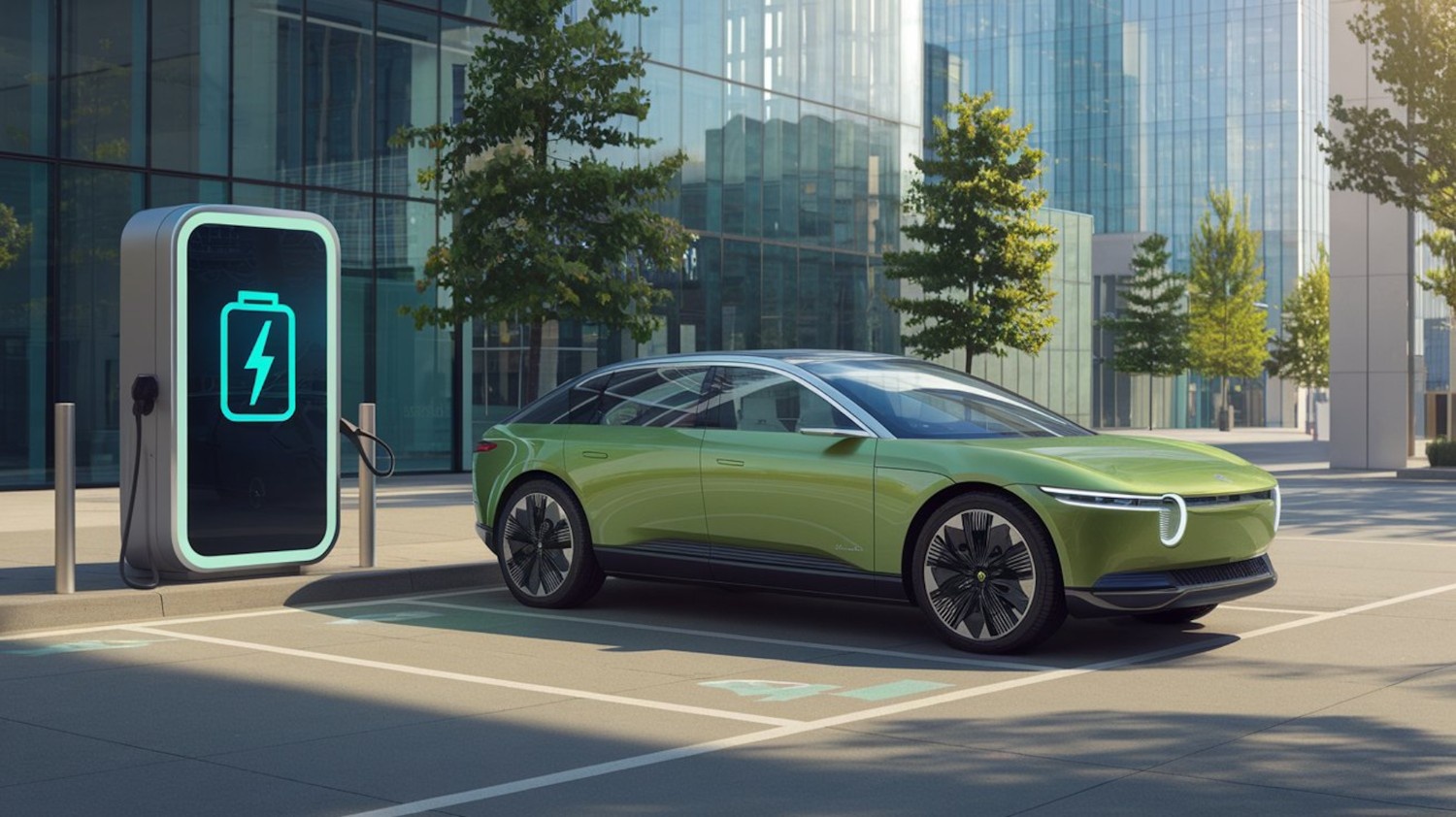
In EVs, the most-discussed tie-ups are in 2025. Consider the ambitious joint venture between Ashok Leyland, a respected commercial vehicle manufacturer in India, and a Chinese battery manufacturer. It is a big deal: the production of domestic batteries for EVs is planned to cost more than 570 million dollars, and that is not even the significant amount. With battery technology, Ashok Leyland was lacking; they now receive it directly from a Chinese playbook: proven cells, management software, and, most importantly, the capability to scale production quickly to meet the needs of the Indian market. The point is to capitalize on India’s booming demand and address its technological deficiencies.

And it’s not an isolated case. In a joint venture with Chinese SAIC, JSW Group is introducing passenger EVs, targeting one million units by 2030. BYD Auto already has a variety of products competing with international giants, leveraging China’s control over battery prices and production scale. Once you learn that about 75% of global battery production capacity is controlled by Chinese companies, it is only natural that Indian companies are keen to form partnerships.
Why India Needs China for Now
The point is that here, batteries account for more than 40% of the price of an EV, and India is not there yet. The localization of production, which the government is driving at, including the 18,000 crore rupee incentive schemes, is the answer to that. Until Indian tech is on the same level, China has experience that cannot be replaced. According to one industry analyst, this explains why you cannot win the EV race when you cannot access the best batteries. Currently, the best batteries are still produced in China.
Of course, such a reliance is somewhat uncomfortable. Will India be able to become self-reliant, or will it mark the start of a 20-year relationship of technological dependence on China?
Cross Border Friction Points: Trust, More and Policy
No India-China relations story can be complete without mentioning the bumps in the road. Indian policymakers are on alert after recent border skirmishes and amid broader geopolitical mistrust. This is why the latest regulatory amendments are so instructive: Chinese companies are usually involved, but in a distinct joint venture with Indian partners, with an element of technology transfer.
In simple terms, India is not eager to become a market for Chinese assembly plants. Investment stakes are limited and the government agencies closely monitor who controls what, whether real know how is finding its way into Indian partners. One effort to balance this is by Niti Aayog, which suggests allowing Chinese entities up to 24%, but no more.
It is a dance, as one of the Delhi-based analysts explained to me. India is interested in the technology and investment, but at the same time does not want to lose too much. The Chinese, on the other hand, require new markets with slower growth and increasing competition in the world market.

Agri Tech and Food Chain Changing Game
Farming can be disrupted, too, although the news about electric cars may take center stage. India also is beginning to open the door to its agri-tech innovators in the world in 2025, with platforms. Cross border cooperation is not just the transition of rudimentary equipment to digital farming solutions: consider satellite-based crop tracking, AI-based supply chain tracking, and precision agriculture.
A striking recent example? Some Indian agribusinesses have entered into mutual research initiatives with the Chinese farm equipment companies and satellite technology manufacturers with a view to increasing food production and reducing food waste. It is not another import Chinese tractors narrative, but it is building a more intelligent digitally networked food system.
But the politics of being partners is never very far behind here either. Both parties desire their intellectual property to be protected, and, with food security on the table, Indian companies are demanding local information, living and sectional ownership of IP, while borrowing innovations from China. One Agri-tech consultant believes that no one is trusting. This model is more of the type of we build together, we share IP, but both parties receive something that is long-lasting.
New Concepts: IP Sharing and Technology Cooperatives
But, wondering what will be different by 2025, it is not only the magnitude of the investment that will be different, but also the complexity of these joint ventures. Previously, the story was fairly simple: China hardware, India market. Shared intellectual property, shared R and D facilities, and gradual transfers of core technology are becoming commonplace in deals. One executive of the battery space joint ventures referred to a process of learn and leapfrog with the Indian engineers collaborating and then moving to the Chinese engineers and then replenishing the technology to locally produce it.
In the agricultural sector, new deals may require the co-development of algorithms, dual patenting and even similar so-called digital twins of supply chain platforms capable of being monetized by both parties worldwide. It is a realistic reaction to distrust, and a recognition that in 2025 none of the sides can afford to act on their own.
Looking Forward: Are We Seeing a Blueprint for Asia’s Next Tech Wave?
India and China are setting the template for a new generation of cross border tech start-ups. The transition has not been frictionless, but it’s indisputably underway. Indian businesses receive the infusion of technology they require, while China gains a huge new market and some desperately needed global reputation at a time when trade routes are under pressure.
It’s interesting to ask: will these joint ventures survive, to lead to an eventual stage where Indian companies are exporting their own innovations back to China? Or will policy hurdles and political gusts cap what could be a strong partnership? Only time will tell. For now, at least, the tone has changed. There’s more realism, a bit more trust, and most importantly, a recognition that in the era of electric vehicles and Agri-tech, no one gets ahead alone.