

Green logistics in 2025 is not just another cliché word, but a movement that is changing the way businesses all over the world consider the issue of shipping, storage, and all the miles the product has to travel before arriving at your doorstep. That is why logistics were fast, large-scale, and cheap throughout the decades. Sustainability has been made the first head of the table now. It is transforming the way companies conduct business, the attitude with which governments conduct operations and even the way customers purchase products.
What Is Green Logistics?
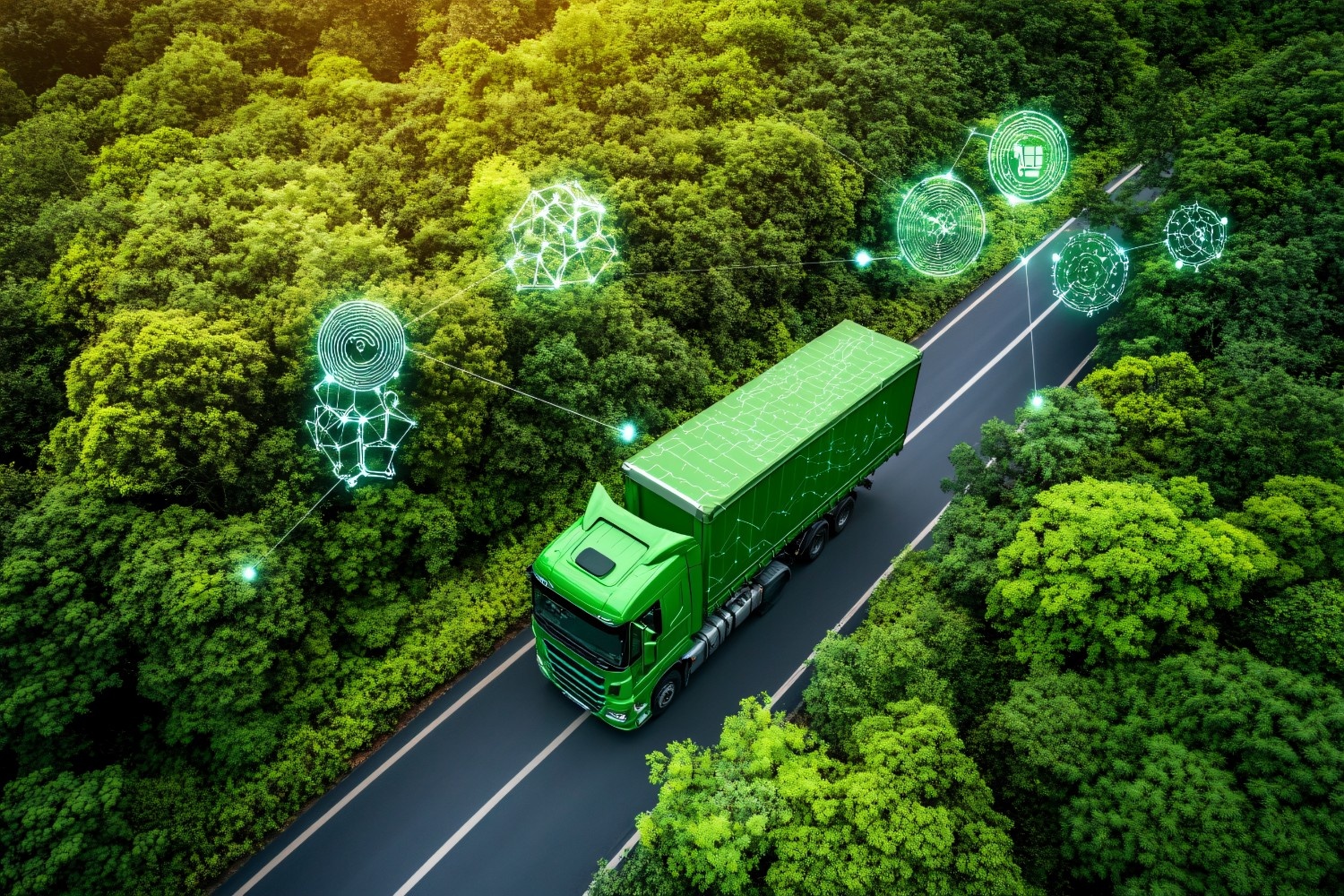
Green logistics brings it all down to greener supply chains in every step. With AI-assisted route optimization as well as electricized fleets, environmentally friendly packaging and reduced waste, the idea is to reduce the environmental footprint of the transportation of goods. It is not merely the reduction of carbon emissions by trucks but a combination of smarter systems, cooperation among industries, and transforming an entire supply chain to healthy planet.
The Numbers Are In: Why Everybody Cares in 2025
The demand of sustainable logistics is mammoth. Logistics contributes almost 14% of overall greenhouse gas emissions in the world with an increasing pressure on the governments, customers, and investors to do something. Today the World Resources Institute has already recorded that more than 60% of consumers would like to hear the greener delivery choices- and that is transforming the manner in which the biggest brands make shipping choices.
The green logistics market is projected to be half a staggering $50 billion by 2025 and may even reach $ 1.9 trillion by 2031, expanding at a very high rate of nearly 8% annually. That is compelling proof that this is no trend, but the new world order.
Cleaner Transport: The Game-Changer of Games
Transportation was always among the leading pollutants, yet 2025 has taken a new turn. Electric trucks, hybrid cars, and even hydrogen powered ships are being rolled out on a large scale. LNG (liquefied natural gas) is applied as a temporary shipping fuel, with a reduction of carbon dioxide by 20% over conventional heavy fuels, and this is even before the fast development of hydrogen and ammonia-powered ships, which emit no carbon.
The city delivery is also receiving a makeover. Electric vans, cargo bikes, and green last-mile hubs are emerging in metropolises around the globe to overcome the limitation of emissions and meet the tougher demands. Brands that do not respond to these trends? Not only are they faced with the danger of being fined, but also losing customer loyalty.

More Intelligent Warehousing and Efficiency
Warehouses do not appear to be a complex place, but in 2025, they will most likely be a hub of eco-innovation. Businesses are constructing using recovered material, running distribution hubs with rooftop sun, and placing intelligent systems regarding lights and climate into location with artificial intelligence.
The energy-intensive cold chain logistics used in the transporting food and vaccines is evolving to use more automated mechanisms that consume significantly less power as a result of real-time Ukrainian internet of things tracking and predictive analytics. Such technologies not only preserve perishable products, but they also consistently reduce carbon emissions by 20-30% and can make considerable savings in the use of fuel and electricity.
The Uses of Technology in Green Logistics
Innovation is essential. Some applications of AI in logistics are companies employing AI-based route optimization to circumvent traffic and reduce idling, end-to-end transparency in carbon reporting courtesy of blockchain, and real-time tracking to reroute around a traffic jam. Smart optimization itself is assisting major firms to act in reducing transport emissions by 20-30, not to mention the waste as well as simplifying the processes.
The world is witnessing the introduction of apps by global brands and start-ups that will allow customers to select Greener delivery options during checkout. These options are simple to implement with little additional cost, yet have a significant influence on overall emissions, and offer consumers more influence than ever on their environmental impact.
Rules and Coercion in Every Direction
New rules are inevitable for global shipping: The International Maritime Organization (IMO) now expects a reduction in carbon intensity by 40% in 2030 and a reduction in the amount of greenhouse gases released annually by 50% in 2050, compared to 2008 levels. The EU and others are threatened with loads of punishment for non-compliance and even withdrawal of environmental impact in trade agreements.
Investors also have their eyes on it. It is a movement towards companies that have plausible decarbonization policies and out of laggards. By 2025, it will not be an advantage to be transparent but rather a necessity.

The Bottom Line: Better Business is Green Logistics
One might easily imagine that green implies increased use of money, yet in the reality, green logistics can be cost savings. Optimized routes use less fuel, power efficient warehouse reduces power bills and green packaging reduces waste disposal costs. As a matter of fact, companies that have adopted sustainable shipping are registering better retention of customers and higher brand confidence. Green is no longer a concept of ethical business, but of good business.
Future Vision
Strategies are still obstacles high initial investments, fragmented regulation and old fleets are still a challenge. The tide of sustainability is to the fore. As the supply chains of the world are increasingly on a green and smart path of shipping, AI, IoT, and alternative fuel development is rapidly changing the course of business and politics, and with more eco-conscious young generations entering the workforce and electing offices, the future of the supply chain is also greener and smarter.
Final Thoughts
We are no longer doing greenwashing or box-ticking with green logistics. In 2025, it is an essential means to save our planet, impress customers beyond any expectation and ensure business success in the long-run perspective. You’re waiting to get your toothbrush or trucking a truck load of car parts, but no matter which, the future of logistics is cleaner and brighter, and it is coming sooner than ever.